Rövid leírás:
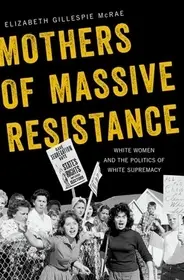
Mothers of Massive Resistance tells the story of how white women shaped racial segregation in the South and postwar conservatism across the nation. Through their work in social welfare, public education, partisan politics, and culture, they created a massive resistance that spanned five decades, and continues to mobilize local communities and survive legislative defeat.
Több
Hosszú leírás:
Why do white supremacist politics in America remain so powerful? Elizabeth Gillespie McRae argues that the answer lies with white women.
Examining racial segregation from 1920s to the 1970s, Mothers of Massive Resistance explores the grassroots workers who maintained the system of racial segregation and Jim Crow. For decades in rural communities, in university towns, and in New South cities, white women performed myriad duties that upheld white over black: censoring textbooks, denying marriage certificates, deciding on the racial identity of their neighbors, celebrating school choice, canvassing communities for votes, and lobbying elected officials. They instilled beliefs in racial hierarchies in their children, built national networks, and experimented with a color-blind political discourse. Without these mundane, everyday acts, white supremacist politics could not have shaped local, regional, and national politics the way it did or lasted as long as it has.
With white women at the center of the story, the rise of postwar conservatism looks very different than the male-dominated narratives of the resistance to Civil Rights. Women like Nell Battle Lewis, Florence Sillers Ogden, Mary Dawson Cain, and Cornelia Dabney Tucker publicized threats to their Jim Crow world through political organizing, private correspondence, and journalism. Their efforts began before World War II and the Brown decision and persisted past the 1964 Civil Rights Act and anti-busing protests. White women’s segregationist politics stretched across the nation, overlapping with and shaping the rise of the New Right. Mothers of Massive Resistance reveals the diverse ways white women sustained white supremacist politics and thought well beyond the federal legislation that overturned legal segregation.
Readers will find this to be a deeply researched and chronologically impressive account of white conservative women in the twentieth century. While McRae claims a specific focus on four white southern women who were activists in conservative organising, the chapters often extend into broader sketches of rapidly shifting global and national landscapes. The New Deal, world war, the threat of communism, decolonisation, and the civil rights movement provided these women with new approaches to championing the cause of white supremacy. McRae’s work highlights the resilience of that position.
Több
Tartalomjegyzék:
Acknowledgments
Abbreviations
Introduction: Segregation’s Constant Gardeners
Part I: Massive Support for Racial Segregation, 1920-1941
Ch. 1 The Color Line in Virginia: The Home-Grown Production of White Supremacy
Ch. 2 Citizenship Education for a Segregated Nation
Ch. 3 Campaigning for a Jim Crow South
Ch. 4 Jim Crow Storytelling
Part II: Massive Resistance to the Black Freedom Struggle, 1942-1974
Ch. 5 Partisan Betrayals: A Bad Woman, Weak White Men, and the End of Their Party
Ch. 6 Jim Crow’s International Enemies and Nationwide Allies
Ch. 7 Threats Within: Black Southerners, 1954-1956
Ch. 8 White Women, White Youth, and the Hope of the Nation
Conclusion: The New National Face of Segregation: Boston Women against Busing
Notes
Bibliography
Index


