Rövid leírás:
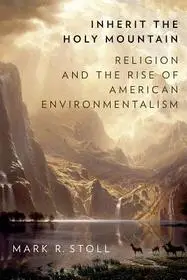
Inherit the Holy Mountain puts religion at the center of the history of American environmentalism rather than at its margins, demonstrating how religion provided environmentalists with content, direction, and tone for the environmental causes they espoused.
Több
Hosszú leírás:
In Inherit the Holy Mountain, historian Mark Stoll introduces us to the religious roots of the American environmental movement. Religion, he shows, provided environmentalists both with deeply-embedded moral and cultural ways of viewing the world and with content, direction, and tone for the causes they espoused.
Stoll discovers that specific denominational origins corresponded with characteristic sets of ideas about nature and the environment as well as distinctive aesthetic reactions to nature, as can be seen in key works of art analyzed throughout the book.
Stoll also provides insight into the possible future of environmentalism in the United States, concluding with an examination of the current religious scene and what it portends for the future. By debunking the supposed divide between religion and American environmentalism, Inherit the Holy Mountain opens up a fundamentally new narrative in environmental studies.
If the geographic region of focus is the United States, then the book is mandatory. The impressive amount of data covered in its pages, and the cohesive narrative that contextualizes and analyzes this data, cannot be captured in a 1,600-word book review. Scholars owe Stoll a debt of gratitude for the 30 years of dedication to crafting this thorough treatment of the impact religion has had on environmentalism in the US. This gratitude should begin with the assignment of this book in graduate seminars devoted to interactions between religion and nature, where it can provide a shining example of scholarship toward which future leaders of the field should aspire.
Több
Tartalomjegyzék:
Introduction
1. Calvinism and Nature: American Foundations
2. Origins of Conservation in the Puritan Landscape
3. Building the Moral Society: Farms, Forests, and Parks
4. Nature, Parks, and Emersonian Modernism
5. Progressive Presbyterian Conservation
6. Presbyterians and the Environmental Movement
7. Nature and New England’s Outsiders
8. A New Era
Conclusion
Appendix
Notes
Index


